
Selling online
Ecommerce built around Alaska shipping reality
Every piece of ecommerce advice on the internet assumes you ship from Ohio. Selling from Alaska breaks most of those assumptions, and the storefront is rarely the hard part. The shipping math is.
The shipping problem comes first
Flat-rate shipping is the default advice everywhere, and it is how an Alaska store loses money on every third order. Rates out of Anchorage do not behave like rates out of the Lower 48, and rates to rural Alaska behave differently again. A customer in Bethel is not a customer in Wasilla, whatever your cart software assumes by default.
So we do this before design. Real dimensional weights for your actual products, real carrier rates, and zone rules that reflect what it costs to get a box where it is going. Sometimes the answer is that a product should not ship at all and belongs as local pickup only. Better to find that in week one than in your first hundred orders.
Fewer products, better pages
Small catalogs outperform big ones for most businesses we work with. Twelve products with real photography, honest descriptions and clear dimensions will beat two hundred thin listings imported from a supplier feed.
Each product gets a page that can actually rank: a description written by a person, structured data so search engines read price and availability correctly, and images sized for a phone on a slow connection. If you sell something that needs explaining, it gets explained on the page rather than in a PDF nobody opens.
What we build on, and why not Shopify by default
Shopify is a good answer for a lot of stores and we will tell you when it is yours. It handles tax, payments and fraud without you thinking about it, and that is worth real money.
Where it stops being the right answer is when your catalog is small and the rest of the site matters more than the cart, or when your shipping rules are strange enough that you are fighting the platform. In those cases a custom build with a payment integration costs less over three years and loads considerably faster. We will make the case either way rather than defaulting to whatever we would rather build.
Build order for a store
Storefronts are easy. The things that sink an online store are all in the operations.
Catalog and shipping
Products, variants, weights, dimensions, and the real cost to ship each one to each zone. This drives everything downstream.
Platform decision
Hosted platform or custom build, argued from your catalog size and shipping rules rather than from habit.
Store build
Product pages built to rank, checkout kept short, payment and tax wired up, inventory connected to whatever you already use.
Test with real orders
We place real orders through the live store before launch, including a rural Alaska address, because that is where rate rules break.
Where we have done this

Alaska Table Makers
Furniture is the hardest thing in Alaska to ship and photograph. A CMS-driven gallery with inquiries handled inline beat a conventional cart for them.
View project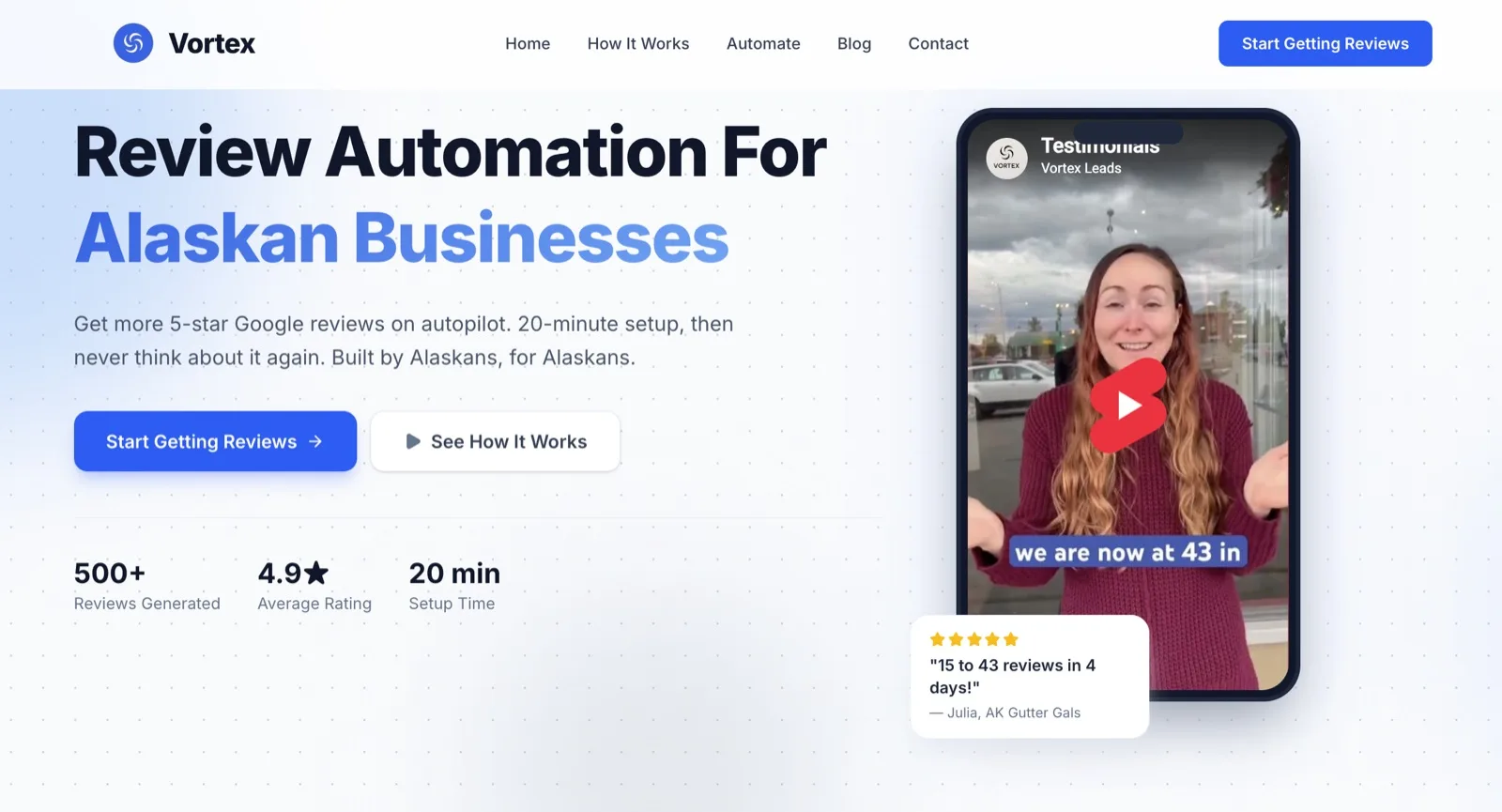
Vortex
Product-led selling with proof up front and a short path to signup, which is the same discipline a good product page needs.
View projectCommon questions
Ecommerce, answered
Should I use Shopify or a custom store?
Shopify if you have a large catalog, complex tax exposure, or you want fraud and payments handled for you. Custom if your catalog is small, your shipping rules are unusual, or the rest of the site matters more than the cart. We will argue it from your numbers rather than our preference.
Can you handle Alaska shipping rates properly?
Yes, and it is the part we do first. Real dimensional weights, real carrier rates and zone rules that treat rural Alaska differently from the Railbelt. Flat-rate shipping is how stores here lose money quietly.
How much does an online store cost?
A small store usually lands in the Anchor or Harbor range on our pricing page, so $3,997 to $9,997 depending on catalog size and how strange the shipping rules are. Anything with heavy integration work gets quoted.
Do you integrate with my existing inventory system?
Usually. If it has an API or can export a file on a schedule, we can connect it. If it is a spreadsheet on one person’s desktop, we should talk about that first, because it will become the bottleneck.
Can I add a store to my existing site later?
Yes, and often that is the right sequence. Get the site earning first, add the cart when there is demand to justify it. Building a store nobody has found yet is a common and expensive mistake.